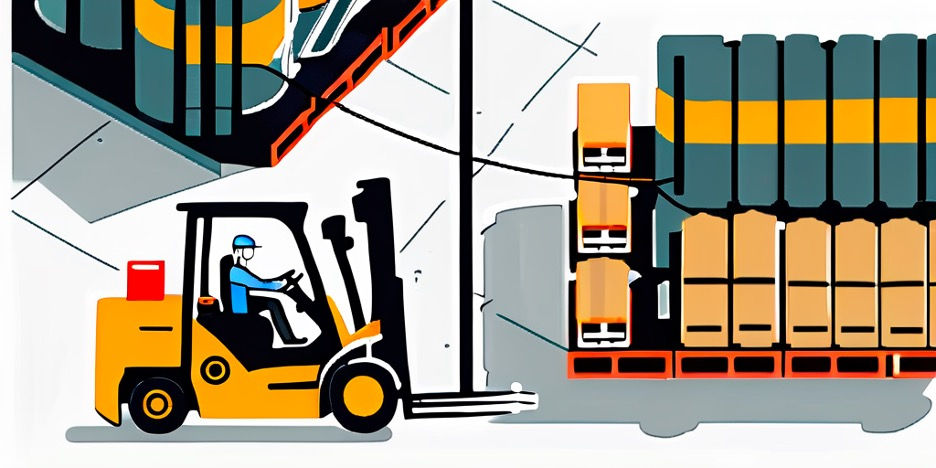
Forklift accidents remain one of the leading causes of warehouse injuries and fatalities. According to OSHA, forklifts are involved in roughly 85 deaths and 34,900 serious injuries every year in the United States alone. The good news? Most of these incidents are preventable with the right safety practices in place.
This comprehensive checklist breaks down forklift safety best practices into actionable categories your team can implement today.
Pre-Operation Safety Checklist
Every shift should start with a thorough inspection. Skipping this step is one of the most common mistakes operators make.
Visual Inspection
- Check for fluid leaks (hydraulic, fuel, coolant) under and around the forklift
- Inspect tires for wear, damage, or debris
- Examine forks for cracks, bends, or excessive wear
- Verify mast chains are properly lubricated and undamaged
- Confirm all safety labels and load capacity plates are visible
Operational Check
- Test the horn and backup alarm
- Verify all lights are functioning (headlights, brake lights, warning lights)
- Check mirrors and ensure they're properly adjusted
- Test the brakes (both service and parking)
- Verify steering responsiveness
- Test the lift and tilt controls
- Ensure the seat belt functions properly
Pro tip: Paper checklists often lead to "pencil whipping" where operators rush through without actually checking. Digital inspection systems with randomized questions keep operators honest and create audit-ready records.
Driving and Maneuvering Best Practices
Once the pre-operation check is complete, safe driving practices become critical.
Speed and Movement
- Obey all posted speed limits (typically 5-8 mph indoors)
- Reduce speed at intersections, blind corners, and pedestrian areas
- Come to a complete stop before changing direction
- Avoid sudden starts, stops, or turns
- Keep forks 4-6 inches off the ground while traveling
- Travel in reverse when the load obstructs forward vision
Visibility and Awareness
- Always look in the direction of travel
- Use mirrors and look behind before reversing
- Sound the horn at intersections, blind spots, and when approaching pedestrians
- Maintain clear visibility; if you can't see, don't move
- Keep eyes on the path, not on your phone or other distractions
Phone use while operating a forklift is a growing problem. AI-powered safety systems can detect and alert supervisors when operators use phones while driving, allowing for immediate coaching.
Load Handling Safety
Improper load handling causes tip-overs, dropped loads, and collisions. Follow these best practices to keep loads secure.
Before Lifting
- Know your forklift's load capacity and never exceed it
- Assess the load weight and ensure it's within limits
- Check that the load is stable and properly balanced
- Verify pallets are in good condition (no broken boards)
- Position forks as wide as possible for stability
While Lifting and Transporting
- Insert forks fully under the load
- Lift loads smoothly without jerking
- Tilt the mast back slightly to stabilize the load
- Never lift or lower while moving
- Keep loads low during transport (4-6 inches)
- Never allow anyone to walk under raised forks
Stacking and Placing
- Approach the stack squarely, not at an angle
- Stop completely before raising the load
- Place loads evenly and squarely on racks or stacks
- Lower forks slowly and tilt forward slightly before withdrawing
- Ensure the load is stable before backing away
Pedestrian Safety Protocols
Forklift-pedestrian collisions are among the most serious warehouse incidents. Creating clear separation and communication protocols is essential.
Facility Layout
- Mark designated pedestrian walkways with floor tape or paint
- Install physical barriers where forklifts and pedestrians must be separated
- Use convex mirrors at blind corners and intersections
- Ensure adequate lighting in all work areas
- Post clear signage indicating forklift traffic areas
Operator Responsibilities
- Always yield to pedestrians
- Make eye contact before proceeding near pedestrians
- Never assume pedestrians see or hear you
- Sound the horn when approaching pedestrian areas
- Stop completely if a pedestrian enters your path
Learn more about identifying and addressing common warehouse safety hazards before they cause incidents.
Parking and Shutdown Procedures
How you leave the forklift matters just as much as how you operate it.
- Park only in designated areas
- Lower forks completely to the ground
- Tilt the mast forward until forks touch the floor
- Set the parking brake
- Turn off the engine/power
- Remove the key (if applicable)
- Never park on an incline; if unavoidable, chock the wheels
- Never block fire exits, emergency equipment, or pedestrian walkways
Building a Safety-First Culture
Checklists and procedures only work when there's accountability and consistent follow-through. Here's how leading warehouses build lasting safety cultures:
Real-Time Coaching
The most effective coaching happens immediately after an incident, not days later. When supervisors can review video footage of exactly what happened, conversations become constructive rather than confrontational. Learn how to coach forklift operators effectively using data and video evidence.
Track Leading Indicators
Don't wait for accidents to measure safety. Track leading indicators like near-misses, speeding events, and unsafe behaviors. These metrics help you identify problems before someone gets hurt. Check out our guide on leading indicators of forklift safety events.
Leverage Technology
Modern forklift monitoring systems use AI and computer vision to automatically detect unsafe behaviors, from phone use and missing PPE to speeding and improper load handling. This takes the guesswork out of safety management and gives supervisors the data they need to coach effectively.
Take Action Today
Forklift safety isn't a one-time training event. It's an ongoing commitment that requires the right processes, accountability, and tools.
Start by implementing this checklist across your operations. Then, consider how technology can help you monitor compliance and coach operators in real-time.
Want to see how leading warehouses are using AI to reduce forklift incidents? Request a demo to learn how OneTrack can help your team build a safer operation.